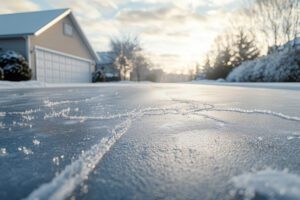
The first frosts of the year are usually not far away in October. They are worth understanding, because frost is one of the main reasons driveways deteriorate over winter. The process behind it is simple, and once you understand it you can see why small problems in autumn are worth dealing with before the cold sets in.
Freeze and thaw, in plain terms
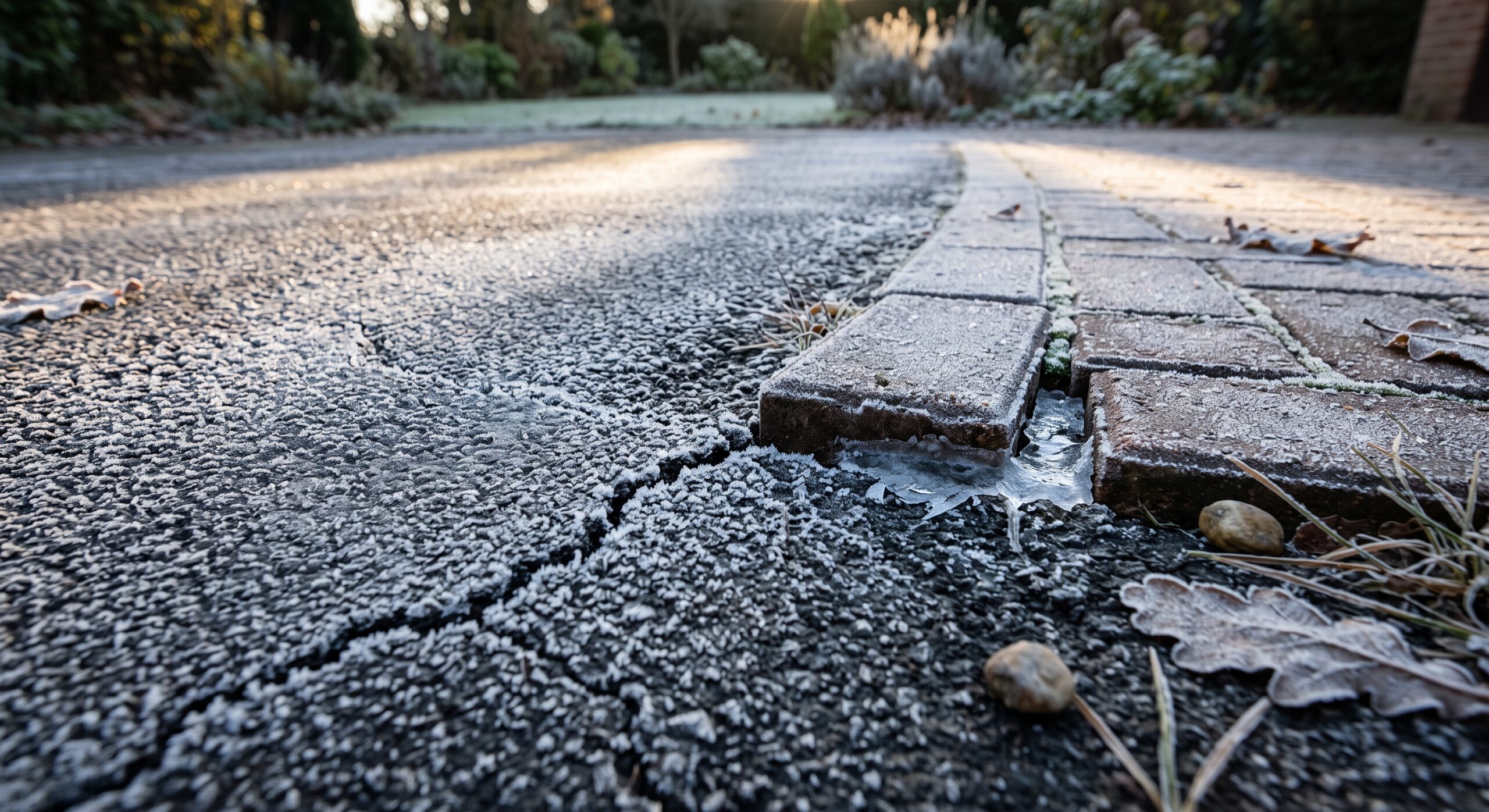
Water expands when it freezes. That is the whole story, really. When water works its way into a crack, a joint or a porous patch in a surface and then freezes, it pushes outwards with real force. The gap widens very slightly. When it thaws, water seeps a little further in. The next freeze pushes harder. Over a winter of repeated freezing and thawing, a hairline crack becomes a real one, and a small weakness becomes a hole. This is called freeze-thaw damage, and it is behind a large share of the potholes and breaks that appear by spring.
How it affects different surfaces
- Tarmac can crack and develop potholes where water has got in, particularly if the surface was already ageing or damaged. Sound, well-laid tarmac copes well, but existing cracks are the weak point.
- Block paving is vulnerable at the joints. If the sand between the blocks has washed out or weeds have opened the joints up, water gets in, freezes, and blocks can lift or shift.
- Resin is generally hard-wearing, but any area where water can sit or penetrate, such as a damaged patch or a poorly drained edge, is where problems start.
The common thread is water getting in where it should not. Keep water out and you take most of the sting out of frost.
Cracks or gaps before winter? Sealing them now is a small job. Left to take on water through a freezing winter, the same fault can become a much bigger repair. Call us on 01787 275929 or use our online contact form and we will take an honest look.
What you can do before the cold sets in
The practical steps are straightforward. Make sure water drains away freely rather than pooling on the surface. Deal with cracks and open joints while they are small. Top up the jointing sand on block paving if it has thinned. And if the surface is already showing its age, get a view on it now rather than after another hard winter has taken its toll. Frost will always come. A surface in good order, with water kept out, will take it in its stride.