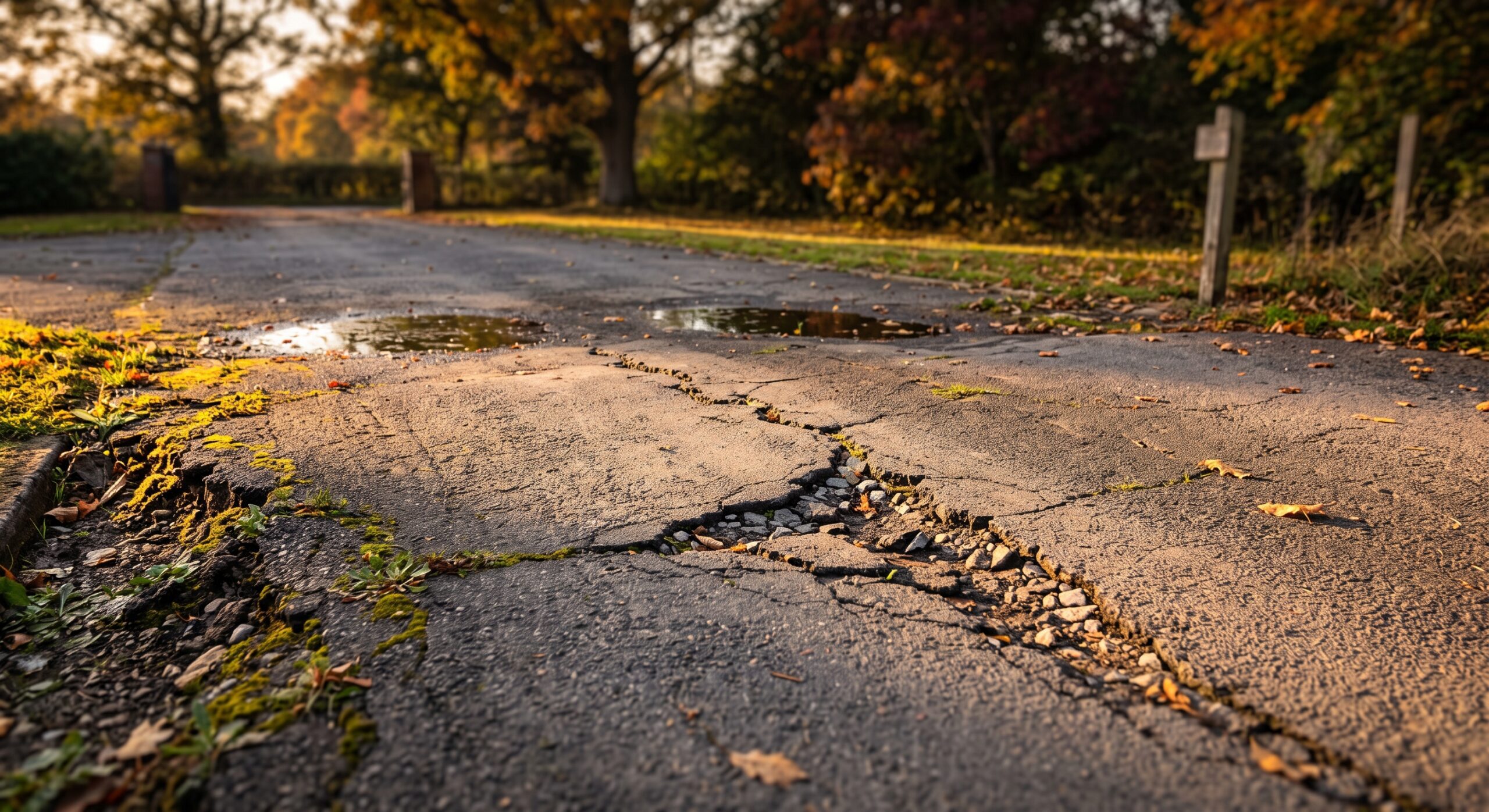
The autumn equinox marks the point where the days start drawing in. Before the light goes, it is worth spending five minutes looking properly at your driveway. Problems are much easier to spot now than on a dark, wet afternoon in December, and catching them early almost always saves money.
What to look for
You do not need to be an expert to notice the common signs. Walk the driveway and look for:
- Cracks, especially ones that are widening or branching rather than fine and stable
- Edges that are crumbling or breaking away, which often start at the sides where support is weakest
- Small potholes or dips where the surface has started to give way
- Colour that has faded from black to grey on tarmac, which is normal with age but worth noting alongside other signs
- Moss, weeds or standing water, all of which point to moisture sitting where it should not
Cosmetic or structural
Not everything on that list means trouble. Faded colour on its own is cosmetic. A hairline crack that has not moved in years may be fine. What matters is the pattern. Widening cracks, crumbling edges and surfaces that feel brittle or hollow when tapped tend to be structural, and those are the ones that get worse over winter as water freezes and thaws in the gaps.
Not sure whether what you are seeing is a problem? That is exactly the sort of thing we are happy to look at. We will tell you plainly whether it needs work now or whether it can wait. Email or use our online contact form.
Why acting early is cheaper
A small crack sealed in autumn is a minor job. The same crack left to take on water through a freezing winter can turn into a much larger repair by spring. None of this is about rushing into work you do not need. It is simply that a driveway, like most things around a house, costs less to look after than to rescue.