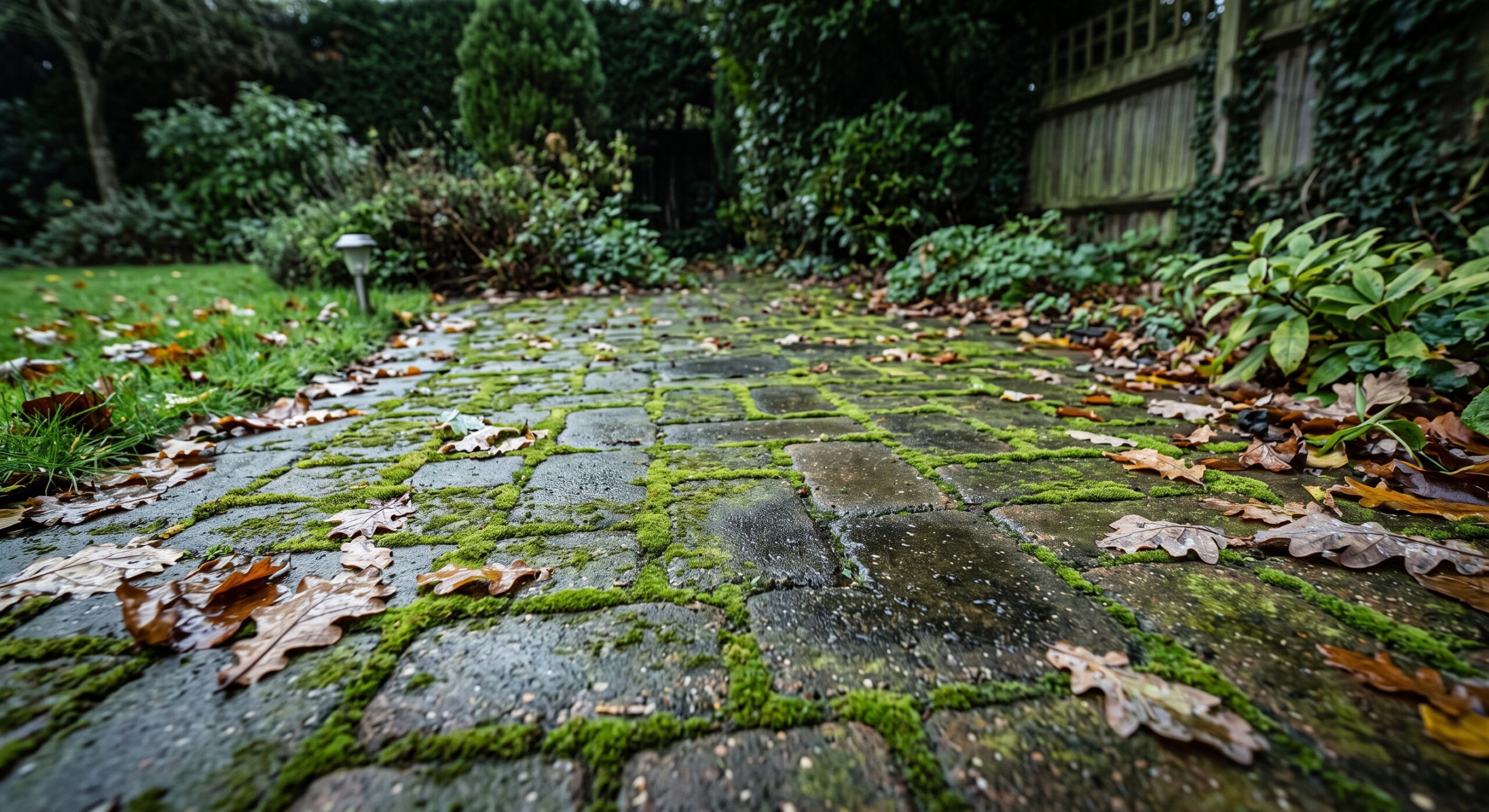
Damp, mild autumn weather is exactly what moss and algae like. If your driveway or path has turned green in patches, particularly in shaded or north-facing spots, this is why. It is more than a cosmetic issue, because a green surface in the wet can become a genuinely slippery one.
Why it appears
Moss and algae need moisture and shade to take hold. Areas under trees, along shaded edges, or anywhere water lingers are the usual first places to go green. Autumn, with its damp and its fallen leaves holding moisture against the surface, gives them ideal conditions. Block paving is often affected first, as the joints hold a little moisture, but any surface can green up.
The safety side
The main reason to deal with it is grip. A mossy or algae-covered surface can be slippery underfoot, especially when wet, and especially on any slope or step. With darker mornings and evenings arriving, that is worth taking seriously for anyone walking up to the door.
Green patches getting worse each year? Sometimes that points to a drainage or shading issue worth sorting properly. We are happy to advise. Email us on
Dealing with it safely
For light growth, a stiff brush and a suitable surface cleaner will usually do the job. Take a little care with pressure washing. On block paving it can blast the jointing sand out of the gaps, which then need refilling, and on some surfaces too much pressure can do more harm than good. If in doubt, gentler and more regular is better than aggressive and occasional. Improving drainage and cutting back overhanging growth to let more light and air in will slow the moss coming back. For surfaces that green up heavily year after year, sealing can help, and it is worth a conversation about whether the underlying cause is something more than surface growth.