A guide for homeowners and property owners across Suffolk, Essex, Cambridgeshire, and beyond
The UK might not be famous for heatwaves, but summers are getting warmer, and prolonged hot spells can put real pressure on driveway surfaces. Whether you have tarmac, resin, block paving, or a surface dressing finish, understanding how heat affects your driveway — and what you can do about it — is worthwhile.
This guide covers what to look out for, how different surfaces respond to high temperatures, and the simple steps you can take to protect your investment.
Why Heat Can Be a Problem for Driveways
Most driveway surfaces are designed to cope with the UK's mild and wet climate. When temperatures rise well above normal — particularly during dry spells that last several days or weeks — surfaces can behave differently. Direct sun exposure, especially on south-facing driveways, intensifies the effect.
The main risks during hot weather are:
- Softening and surface deformation
- Scuffing or marking from vehicles and heavy loads
- Cracking as surfaces expand and contract
- Joint and edge deterioration on older surfaces
- Weed growth taking advantage of softened or dried-out joints
How Different Surfaces Are Affected
Tarmac
Tarmac contains bitumen — a binding material that gives it its dark colour and flexibility. This is what makes tarmac so effective in wet and cold conditions. However, bitumen softens when it gets very hot. In prolonged high temperatures, this can cause tarmac to become slightly pliable, particularly on older or thinner surfaces.
You may notice:
- Indentations from vehicle tyres or kick-stands
- Scuff marks from sharp turns or heavy loads
- A soft or slightly tacky feel underfoot
A professionally installed tarmac driveway, correctly graded for residential use, will generally cope well with typical UK summers. The risk of serious deformation is greatest on older surfaces, those laid too thinly, or where the sub-base was not properly prepared.
Resin
Resin-bound surfaces are UV-stable by design, meaning they should not fade or discolour in direct sunlight. Because they are permeable, they also manage heat slightly differently to solid surfaces — there is less heat absorption and retention compared to a dense tarmac or concrete finish.
Well-installed resin surfaces hold up reliably in hot weather. Issues are more likely to arise on older installations where the UV-stabilisation has degraded over many years, or where the resin was not mixed or laid to a sufficient depth at the time of installation.
Block Paving
Block paving is generally robust in hot weather, but the jointing sand and bedding layer can dry out significantly during a long dry spell. This can cause blocks to become slightly looser, and joints may start to look thin or crumbled at the edges. Weed seeds are more likely to establish in dried-out joints, so late summer is often when this becomes noticeable.
Surface Dressing (Tar and Chip)
Surface dressing uses a bitumen binder with a layer of aggregate chippings, which means it is susceptible to softening in very high temperatures — in a similar way to tarmac. If the surface becomes soft during a heatwave, chippings can become loose. It is worth avoiding sharp turns or heavy manoeuvring on a tar and chip surface during peak heat.
Practical Steps to Protect Your Driveway in Hot Weather
1. Avoid heavy loads during the hottest part of the day
If you have a tarmac or surface dressing driveway, try to avoid parking heavy vehicles — particularly those with narrow tyres such as caravans, trailers, or skips — on the surface during the hottest hours. Early morning or evening is a better time if you need to position heavy items.
2. Move static vehicles periodically
A vehicle parked in the same spot for several days during a heatwave can leave indentations in softened tarmac. Shifting its position slightly every couple of days distributes the weight and reduces the risk of permanent marking.
3. Avoid sharp turns
Turning wheels on the spot — rather than while moving — applies concentrated shear force to the surface. This is particularly damaging when tarmac or surface dressing has softened in the heat. Move the vehicle before turning where possible.
4. Keep the surface clear of debris
Hot weather can accelerate the deterioration of vegetation on or around the driveway. Leaves, moss, and organic matter left on the surface can trap moisture when rain does arrive and contribute to surface staining or joint deterioration over time. A light brush or rinse is sufficient.
5. Attend to joints and edges on block paving
If you notice joints thinning out or edges beginning to crumble during dry weather, kiln-dried jointing sand can be brushed in to top them up. This is straightforward maintenance that prevents more significant movement from developing over time.
6. Do not use a pressure washer on a softened surface
If tarmac or surface dressing has noticeably softened during a heatwave, wait until temperatures return to normal before jet washing. Pressure washing a softened surface can disturb the top layer and cause long-term damage.
When to Call a Professional
Most hot weather issues are cosmetic or temporary. Once temperatures cool, surfaces generally firm back up without lasting damage — provided they were correctly installed in the first place.
However, if you notice:
- Deep or persistent ruts and indentations
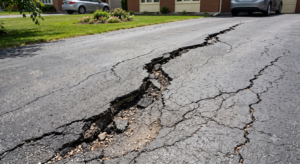
- Cracking that runs across the surface rather than just at the edges
- Significant loose aggregate on a surface dressing finish
- Sections of block paving that have lifted or shifted noticeably
...then it is worth having the surface assessed. In some cases, what appears to be heat damage is actually a pre-existing issue with the sub-base or the original installation — and the hot weather has simply made it more visible.
A Note on New Surfaces
If you have had a new driveway installed in the past few months, it is worth being particularly careful during hot spells. Fresh tarmac takes time to fully cure, and while it will be solid enough for normal use, it is more susceptible to marking and indentation during the first summer. Treat it with the same precautions outlined above — avoid static heavy loads and sharp turns in peak heat.
Thinking About a New Driveway?
If a hot summer has highlighted problems with your existing surface — cracking, deformation, or drainage issues — it may be the right time to consider a replacement. Heritage Roadways works with homeowners and property owners across Suffolk, Essex, Cambridgeshire, Norfolk, Hertfordshire, Berkshire, and the Cotswolds.
We offer tarmac, resin-bound, block paving, surface dressing, and natural stone surfacing, and we carry out a full site assessment before recommending the most appropriate solution for your property.
To discuss your driveway, contact us on 01787 275929 or email .