Most driveways look fine in a dry summer. The sun is out, the surface is dry, and any problems stay hidden. Then the first proper rain arrives after weeks of dry weather, and all sorts of things come to the surface. Water pools where it should run off. Puddles sit for hours. Damp creeps into cracks you never noticed. If that sounds familiar, your driveway is trying to tell you something.
Here is what is going on, why it matters, and what is worth doing about it before the wetter months set in.
What a long dry spell does to a driveway
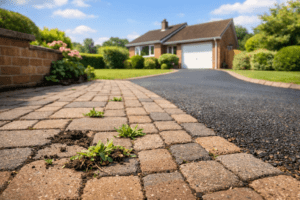
A hot, dry summer is harder on a driveway than most people realise. Heat softens tarmac and can leave it more prone to scuffing and marking. The ground underneath dries out and shrinks, which opens up small gaps and lets edges and joints move. On older surfaces, the fine material that binds everything together dries out and works loose, so the surface starts to thin and wear.
None of this is obvious while the weather stays dry. The damage is there, but there is no water around to reveal it.
What the rain then reveals
Rain is the great leveller for a driveway. When it finally comes down, it finds every weak spot at once.
The most common sign is standing water. If rainwater pools in the low spots and takes a long time to clear, the falls on your driveway are no longer moving water to where it should go, or a drain or soakaway is struggling to cope. Worn patches show up too, because water sits on them rather than running straight off. And any cracks that opened up over the summer now let water down into the surface and the base beneath it.
That last one is the real problem. Water is the main enemy of any driveway. Once it gets in, it works away at the base, and when the frosts arrive in winter it freezes, expands, and makes every crack a little bigger. A small issue in September can become a proper repair by February.
Not sure how your driveway is coping? We offer a free, no-obligation look and quote across Suffolk, Essex and the surrounding counties. Get in touch and we will give you an honest assessment.
Standing water is usually one of two things
If water is not draining off your driveway properly, it tends to come down to one of two causes.
The first is drainage. The surface may be sound, but the falls are wrong or a drain or soakaway is blocked or undersized, so the water has nowhere to go. This is often fixable without replacing the whole driveway. Our guide on dealing with driveway drainage problems goes into the common causes in more detail.
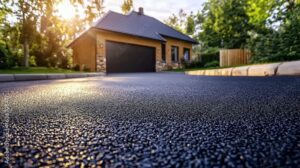
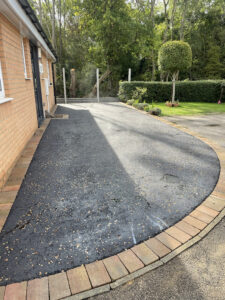
The second is the surface itself. If the top has worn thin and lost its seal, water soaks in rather than running off. This is where surface dressing, also known as tar and chip, does a lot of good. A fresh layer of bitumen and stone chippings reseals the surface, restores grip, and helps rainwater run off the way it should. It is a proven, cost-effective way to bring a tired driveway back to life, usually for a good deal less than a full replacement.
Often it is a bit of both, and a site visit is the only reliable way to tell which.
Why now is the sensible time to act
The dry weather we have just had is actually the ideal condition for laying tar and chip and for most surfacing work, because the surface needs to be dry for it to bind properly. That window does not last forever. Once autumn sets in and the ground stays wet, laying conditions get harder and the choice of what can be done narrows.
Sorting a driveway now, before the wetter months and the first frosts, means you go into winter with a surface that sheds water rather than holds it. It is far easier and cheaper to reseal a driveway that is starting to wear than to rebuild one that has let water get into the base.
What to do next
If your driveway did not cope well with the last downpour, it is worth getting it looked at while there is still a dry spell to work in. A quick check will tell you whether it is a drainage job, a surface dressing job, or something that can wait. There is no pressure either way, and knowing where you stand is better than finding out in the middle of winter.
We have been laying tar and chip and sorting driveway drainage across Suffolk, Essex and the wider region for over forty years, on everything from home driveways to farm tracks and access roads. If you would like an honest opinion on yours, we are happy to come and take a look.
Book Your Free Driveway Check
If the last downpour left water sitting on your driveway, it is worth getting it looked at while the weather is still on our side. We will give you an honest opinion on whether it needs surface dressing, a drainage fix, or nothing much yet.
Call 01787 275929 or request a free, no-obligation quote, and we will arrange a visit at a time that suits you. We cover Suffolk, Essex and the surrounding counties.