Your driveway does a lot more than hold your car. For most households, it's one of the hardest-working surfaces on the property, used daily by vehicles, people, children, and sometimes equipment that it was never originally designed to handle.
Understanding how your driveway is actually used day-to-day helps you choose the right surface in the first place, and look after it properly once it's down.
Parking — The Obvious One
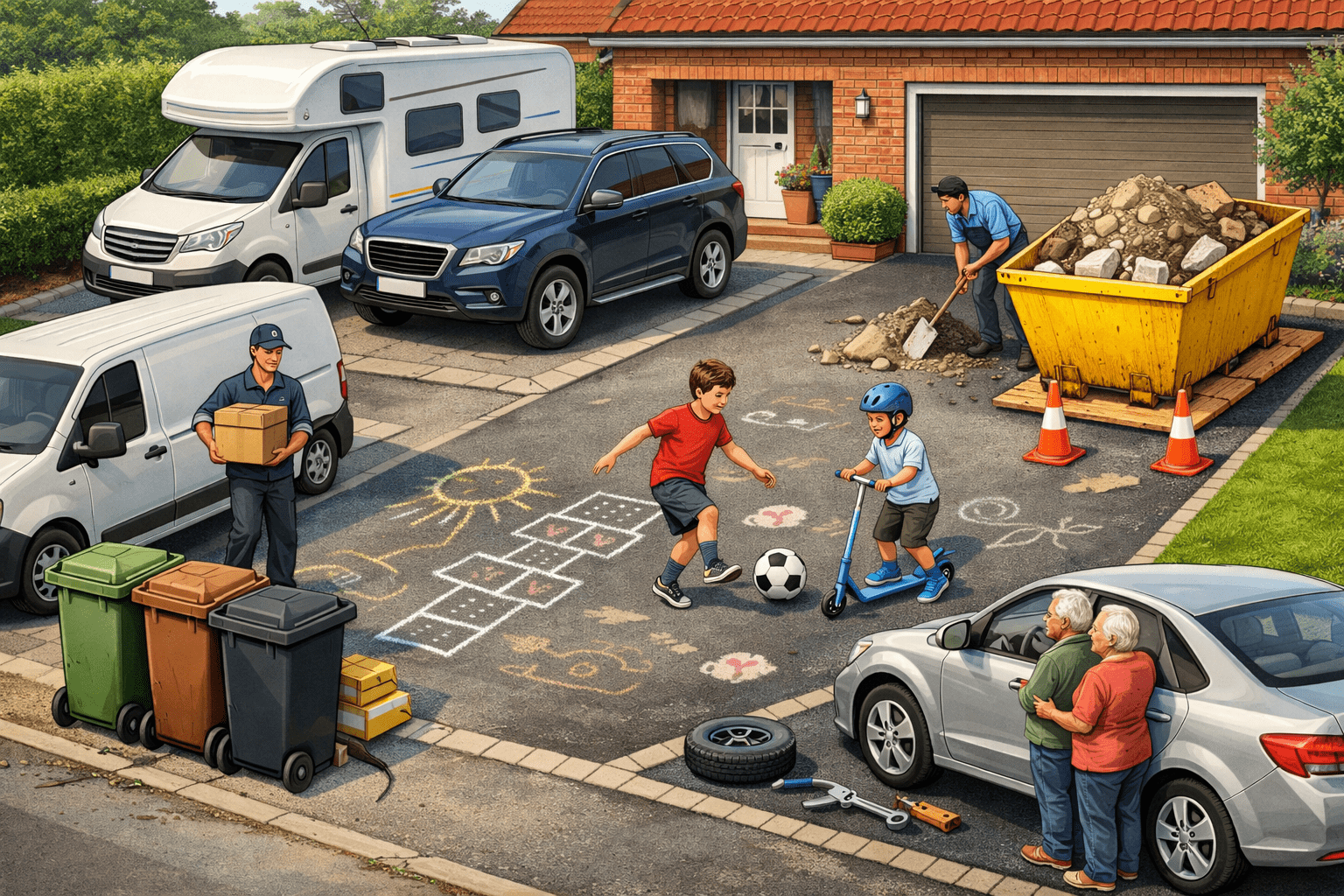
The most obvious use is, of course, parking. But even within that simple category, there's significant variation. A family with two saloon cars puts a different load on a surface than a household with a large 4x4, a van, or a motorhome. Heavy vehicles concentrate load over a smaller contact area and can cause surface deformation over time, particularly in warmer months when tarmac softens slightly.
If you regularly park a heavy vehicle in the same spot, particularly if it sits there for extended periods, this is worth discussing with your contractor. A slightly thicker sub-base or a more robust surface material can make a significant difference to long-term performance.
Children Playing
This is one of the more overlooked factors in driveway wear. A tarmac or resin-bound surface doubles as a football pitch, a bike track, a scooter circuit, and a chalk drawing canvas for most families with young children. This kind of use is generally fine for a well-installed surface, but it can highlight weaknesses.
Repeated impact from ball sports, particularly near edges, can cause surface chips or cracking over time if the edging isn't solid. Scooters and bikes with small, hard wheels concentrate load in a way that larger tyres don't, and can scuff softer surfaces. Chalk washes off easily and causes no lasting damage, that one's fine.
The key takeaway: if you have children who will regularly use the driveway as a play space, a harder-wearing surface like tarmac or resin-bound is worth considering over looser materials.
Thinking about a new driveway, or concerned about how your existing surface is holding up?
Heritage Roadways offer free, no-obligation site visits across Suffolk, Essex, Cambridgeshire, Norfolk, Hertfordshire, Berkshire, and the Cotswolds.
Call us on 01787 275929 or email to arrange a visit.
Deliveries and Turning Movements
Modern households receive far more deliveries than previous generations, and delivery vehicles, particularly larger vans, create specific stresses on driveways. The turning movements involved in reversing onto and off a driveway generate lateral forces on the surface, which is different to the straightforward compression of parking. This is one reason good edging and proper compaction during installation matters so much.
If your driveway is used regularly by delivery vehicles, or you run a business from home that involves frequent commercial vehicle access, this is a relevant factor in your choice of surface and installation specification.
Bin Storage and Wheeled Bins
Wheelie bins are a small but consistent source of driveway damage. Repeatedly dragging or wheeling bins across a surface — particularly at the edge near the bin storage area, can cause scuffing and, over time, surface wear. Hard plastic bin wheels on a surface that wasn't fully cured at installation are a particular problem.
It's a minor point, but worth noting that allowing a newly installed surface appropriate curing time before heavy use (including regular wheeling of bins) extends its lifespan.
Occasional Heavier Use
Many homeowners use their driveway periodically for things outside the normal routine, skip placement during a house renovation, parking for a large family gathering, or temporary storage of materials. These occasional uses are worth thinking about.
A skip, for example, places a significant concentrated load on a relatively small area. Even a well-installed driveway can be indented or cracked if a skip is placed on it without boards to distribute the weight. If you're planning any renovation work, it's worth protecting your surface before the skip arrives rather than discovering damage afterwards.
What This Means When Choosing a Surface
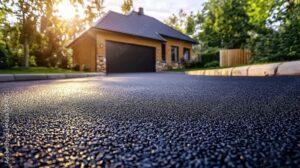
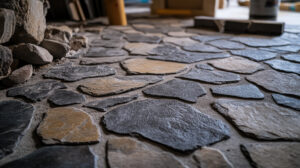
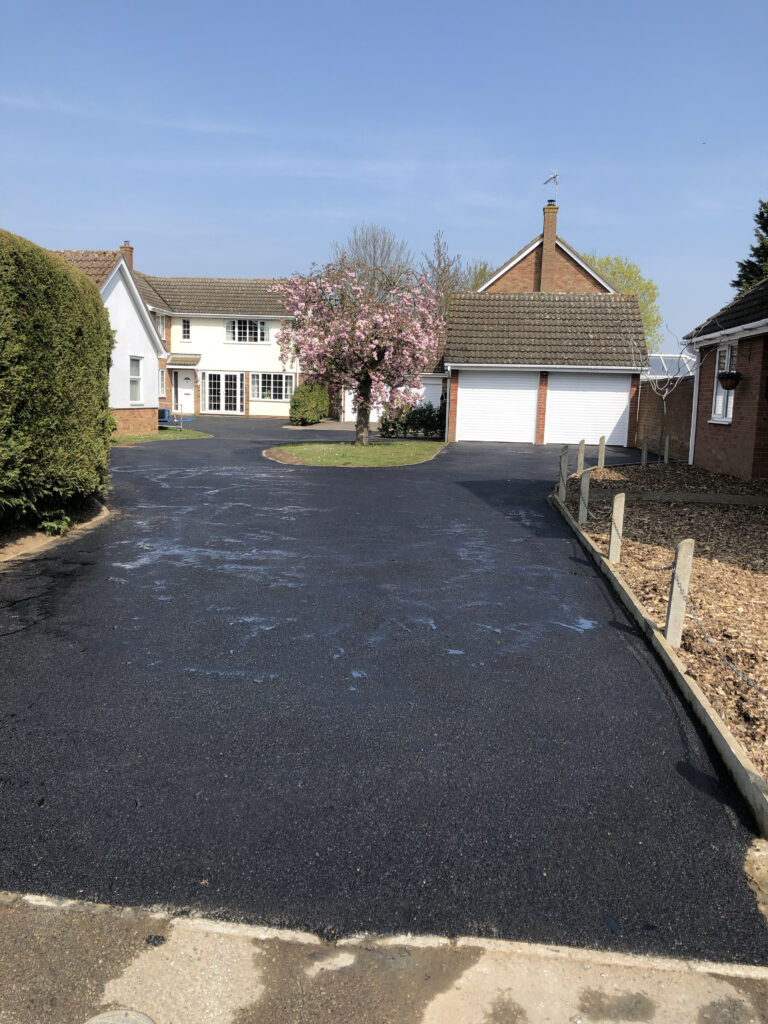
Different surfaces suit different usage patterns. Tarmac and asphalt offer good durability across the range of uses above. Resin-bound surfaces are hard-wearing and visually attractive, though they require proper installation to perform well under varied use. Block paving handles load well but can develop loose or sunken blocks over time if the sub-base settles.
Surface dressing, our lead recommendation for rural and agricultural settings, is well-suited to heavier use and high traffic, and is particularly resilient in exposed conditions.
Whatever the surface, the quality of what's underneath it matters just as much as the material on top. A solid, well-compacted sub-base is the foundation everything else depends on.
Thinking about a new driveway, or concerned about how your existing surface is holding up? Heritage Roadways offer free, no-obligation site visits across Suffolk, Essex, Cambridgeshire, Norfolk, Hertfordshire, Berkshire, and the Cotswolds. Get in touch to arrange a visit.
Signs Your Driveway Is Struggling With Its Workload
If your driveway is already showing signs of wear, it's worth identifying what's causing them before simply patching the surface. Common indicators that a driveway is under more stress than it was designed for include:
Rutting or deformation, particularly in parking areas, suggests either the surface wasn't designed for the vehicles using it or the sub-base wasn't adequate. Edge cracking often indicates the edging wasn't properly installed or has shifted. Surface cracking across a wider area can point to sub-base settlement, frost damage, or both.
In many cases, these problems can be addressed without a full replacement, but it's worth getting a professional opinion early, before minor issues become major ones.
Looking After a Well-Used Driveway
Regardless of surface type, a few simple habits extend driveway life considerably. Keeping drains and gullies clear prevents water pooling, which is one of the main causes of surface deterioration. Addressing small cracks or loose areas promptly prevents them spreading. And avoiding point loads, whether from skip feet, heavy equipment, or constant parking in the same spot, reduces wear on any surface.
Heritage Roadways has been installing and maintaining driveways across the UK for over 40 years. If you have questions about your existing surface or are considering a new installation, we're happy to offer straightforward, honest advice.