If you're planning a new driveway or road surfacing project, you've likely encountered the terms "tarmac" and "asphalt" used interchangeably. But are they really the same thing? At Heritage Roadways, we're frequently asked about the difference between these two popular surfacing materials, so we've put together this comprehensive guide to clear up the confusion.
The Key Difference: It's All About the Binder
The fundamental difference between tarmac and asphalt comes down to the binding material used to hold the aggregate—crushed stone, sand, and gravel—together.
Asphalt uses bitumen as its binder. Bitumen is a thick, sticky, black substance derived from petroleum (crude oil). This petroleum-based binder gives asphalt its characteristic properties and performance advantages.
Tarmac (short for Tarmacadam) originally used tar as its binding agent. Tar is a by-product of coal production, giving traditional tarmac distinctly different properties from modern asphalt.
The Plot Twist: Modern "Tarmac" Is Usually Asphalt
Here's where things get interesting: in modern construction, particularly in the UK, the term "tarmac" is often used colloquially to describe road surfaces, but the actual material being laid is frequently bitumen-based—making it technically asphalt, not traditional tarmac at all.
This bitumen-based version of the old tarmac recipe is sometimes called "bitmac," and it's what most people encounter when they think they're getting "tarmac" for their driveway or car park.
So when your neighbour says they've just had their "tarmac driveway" resurfaced, chances are they've actually had asphalt installed!
Comparing Tarmac and Asphalt: The Details
Let's break down the key differences and characteristics between these two materials:
Binder Material
Asphalt: Uses bitumen derived from petroleum. Traditional Tarmac: Uses tar derived from coal
This fundamental difference affects virtually every other property of the materials.
Durability and Performance
Asphalt offers superior durability. It's more flexible than traditional tarmac, which makes it better suited for heavy traffic and major roads or airport runways. This flexibility means asphalt is less prone to cracking under stress and can better withstand the expansion and contraction caused by temperature changes.
Traditional Tarmac provides moderate durability but is more rigid in nature. This rigidity can make it prone to cracking under heavy loads or during freeze-thaw cycles, particularly on surfaces that experience significant traffic.
Maintenance Requirements
Asphalt requires less maintenance overall. It's more resistant to the British weather and—crucially—more resistant to damage from oil and fuel spills. This makes it an excellent choice for driveways, forecourts, and petrol stations where vehicle fluids are a concern.
Traditional Tarmac can be damaged by petrol or diesel spills, which can break down the tar binder over time. This means it may require more frequent maintenance and repairs, particularly in areas exposed to vehicle fluids.
Surface Finish
Asphalt typically provides a smoother finish. When professionally laid, it creates a sleek, uniform surface that's ideal for line markings and offers excellent traction for vehicles.
Traditional Tarmac generally has a coarser, rougher texture. While this can provide good grip, it may not offer the same smooth, polished appearance that many property owners desire.
Environmental Considerations
Asphalt is highly recyclable. Old asphalt can be reclaimed, reheated, and reused in new surfacing projects, making it an environmentally responsible choice. In fact, asphalt is one of the most recycled materials in the world.
Traditional Tarmac is less easily recyclable due to its tar content, though modern "bitmac" formulations have improved recyclability compared to the original coal-tar versions.
Common Applications
Asphalt is the material of choice for major roads, motorways, airport runways, and large car parks. Its superior durability and performance under heavy traffic make it ideal for high-demand applications.
Traditional Tarmac was historically used for roads but is now more commonly found in smaller-scale applications like residential driveways and footpaths, primarily where cost considerations for smaller areas make it attractive. However, even in these applications, bitumen-based "bitmac" or asphalt is increasingly being used instead.
Which Should You Choose for Your Project?
At Heritage Roadways, we primarily work with modern asphalt (bitumen-based) surfacing for both domestic and commercial projects. Here's why:
For Driveways
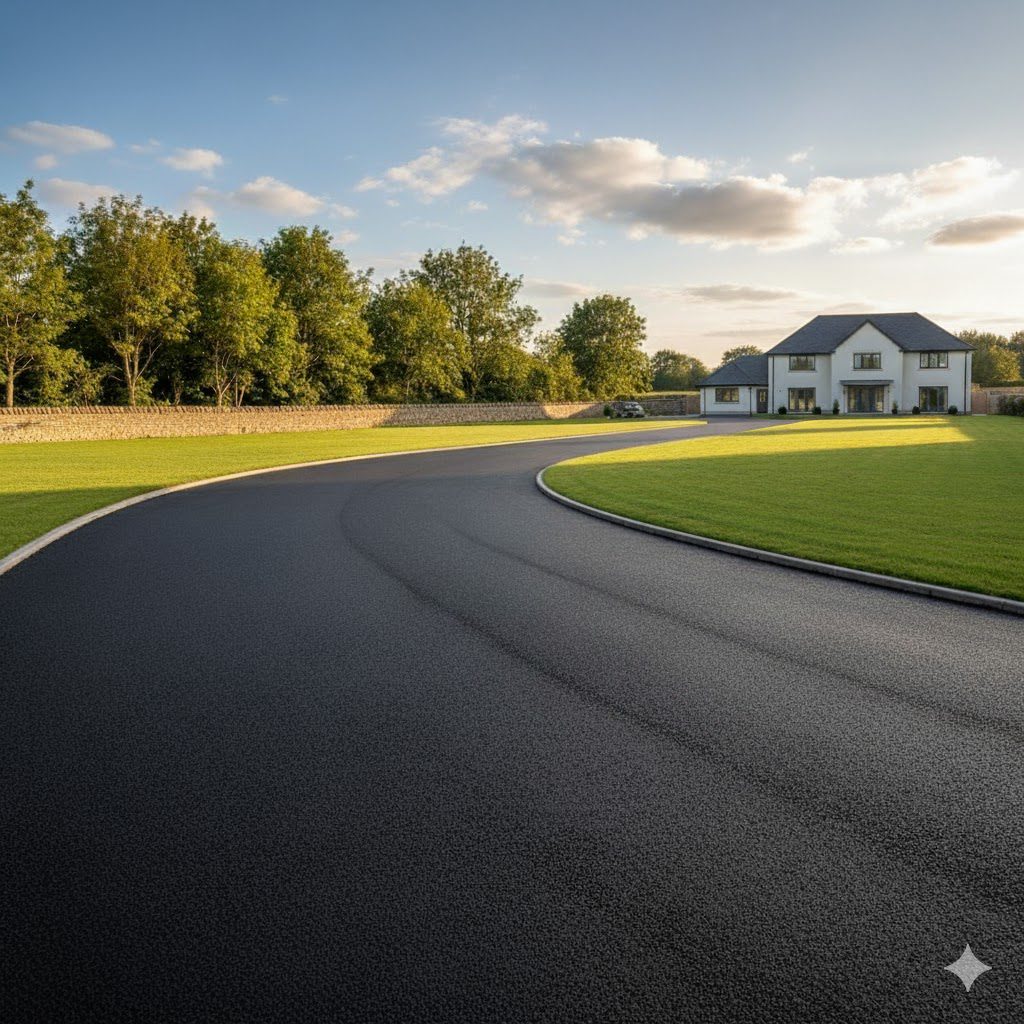
Asphalt offers the perfect combination of durability, appearance, and low maintenance for residential driveways. It handles daily vehicle traffic effortlessly, resists oil spills from cars, and maintains its appearance with minimal upkeep.
For Commercial Surfaces
The superior performance of asphalt under heavy traffic makes it the clear choice for commercial car parks, forecourts, and access roads. Its resistance to fuel spills is particularly valuable for petrol stations and delivery areas.
For Long-Term Value
While the initial cost difference may be minimal, asphalt's reduced maintenance requirements and longer lifespan make it a more cost-effective choice over the lifetime of the surface.
The Terminology Confusion
So why does the term "tarmac" persist in everyday language when we're usually talking about asphalt?
The answer lies in history and habit. Tarmac was the original proprietary name for tar-based road surfacing, invented by John Loudon McAdam in the 1820s. The term became so ubiquitous in the UK that it entered common usage as a generic term for any dark, hard-surfaced road or driveway—much like "Hoover" became synonymous with vacuum cleaners.
Even though modern road construction has largely moved away from coal-tar-based materials in favour of petroleum-based bitumen (asphalt), the old terminology stuck. Today, when most British people say "tarmac," they're actually referring to asphalt.
What We Use at Heritage Roadways
At Heritage Roadways, we specialise in modern asphalt surfacing using high-quality bitumen binders. This gives our clients the best possible combination of:
- Durability – Surfaces that withstand heavy use and harsh weather
- Flexibility – Reduced cracking and longer lifespan
- Appearance – Smooth, professional finishes
- Low Maintenance – Minimal ongoing care requirements
- Resistance – Protection against oil, fuel, and chemical damage
- Sustainability – Fully recyclable materials
Whether you call it "asphalt," "tarmac," or "bitmac," what matters most is that you're getting a professionally installed, high-quality surface that will serve you well for decades to come.
The Bottom Line
While there are technical differences between traditional tarmac (tar-based) and asphalt (bitumen-based), in modern UK construction, the two terms have become largely interchangeable. The vast majority of "tarmac" surfaces installed today are actually asphalt.
The good news? Modern asphalt surfacing offers superior performance, durability, and value compared to the original tar-based tarmac it has largely replaced. When you choose Heritage Roadways for your surfacing project, you're getting the benefits of cutting-edge asphalt technology combined with our 25+ years of installation expertise.
Need Expert Surfacing Advice?
Still unsure whether asphalt (or "tarmac") is the right choice for your project? The team at Heritage Roadways is here to help. We provide complimentary site assessments and can recommend the ideal surfacing solution for your specific needs, whether it's a residential driveway, commercial car park, or forecourt.
Contact Heritage Roadways today to discuss your project. We serve Suffolk, Essex, Norfolk, and beyond, bringing professional expertise and quality workmanship to every installation.
Remember: Whatever you choose to call it, what really matters is proper installation by experienced professionals. That's where Heritage Roadways excels—delivering surfaces that look great and perform brilliantly for years to come.
Have questions about your surfacing project? Get in touch with Heritage Roadways for expert advice and a no-obligation quotation.