
Road Planings for Tracks, Drives and Yards
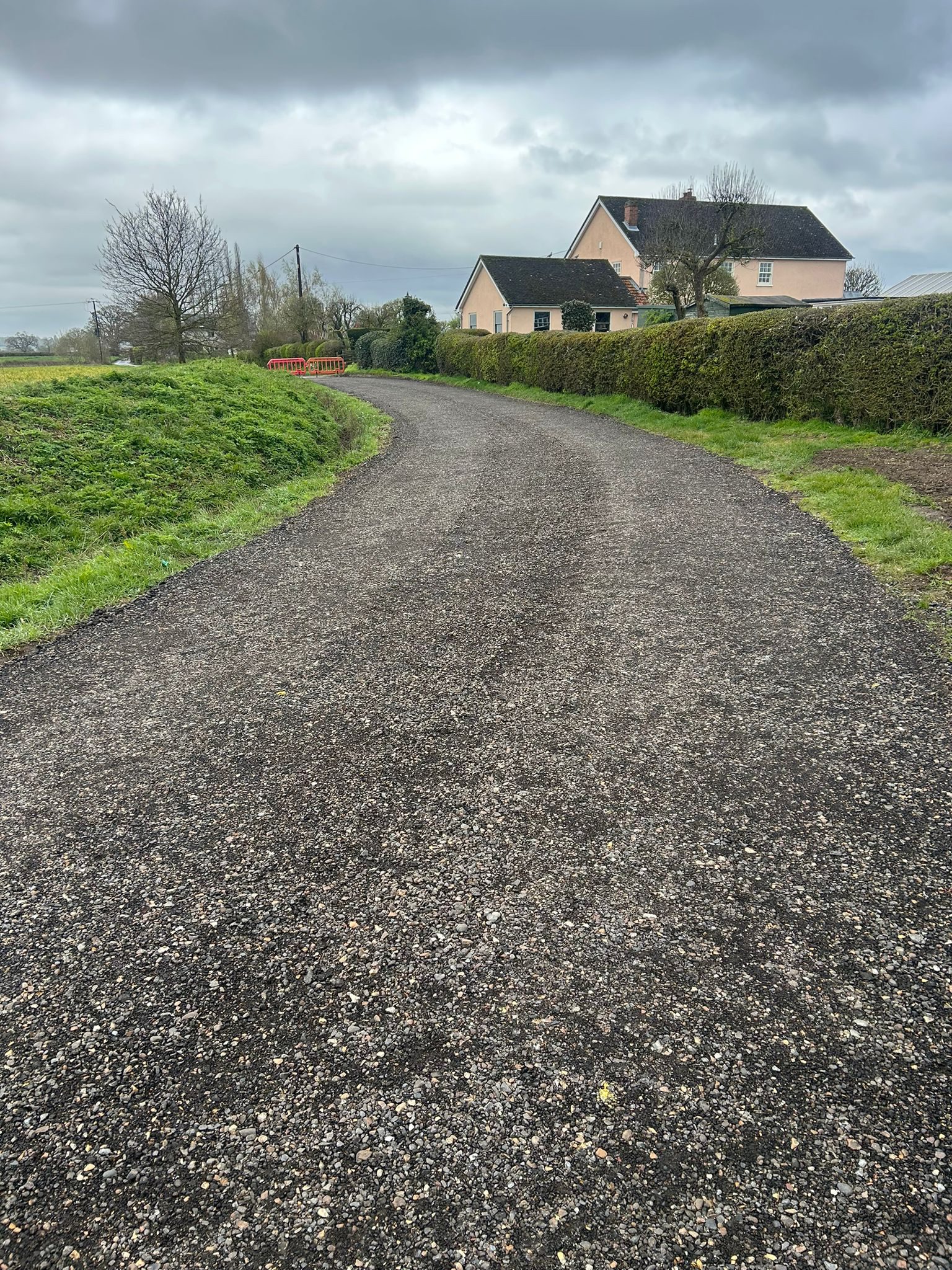
Road planings are a practical, lower-cost surface for farm roads, long private drives, yards and site access. They are made from recycled road surface, laid on a prepared base and rolled to a firm, even finish.
Heritage Roadways is a family-run surfacing company based in Sudbury. We lay road planings across Suffolk, Essex and the surrounding counties, and we visit every site before we quote.
You may also see them called road plannings or tarmac planings. It is the same material.
Email info@heritageroadways.co.uk for a free quote, or call 01787 275929.
Get a quote
What are road planings?
When a road is resurfaced, the worn top layer is planed off and taken away. That material is crushed asphalt and stone, and it still contains bitumen. Instead of being thrown away, it can be reused as a surface in its own right.
Spread to the right depth and rolled, road planings bind together into a firm surface that settles further under traffic and in warm weather. It is not a sealed finish like tarmac, but for the right place it does the job at a lower cost.
Why choose road planings?
Road planings suit places where a full tarmac surface would cost more than the job needs. For long tracks, yards and working areas, that is often the case.
Recycled material
Planings are reclaimed from old road surfaces, so good material is reused instead of adding new stone.
Lower cost
Planings usually cost less than a new tarmac surface, which makes them a sensible choice for long tracks and larger areas.
Made for working tracks
A firm, compacted surface that copes with farm vehicles, deliveries and regular site traffic.
Quick to lay
On a sound base, planings can be spread and rolled in a short time, with less disruption than a full resurfacing.
How we lay road planings
A good road planings surface starts with the ground underneath it. This is how we work:
- Site visit and written quote - We look at the existing surface, the drainage and the traffic it will carry, then give you a written quote in plain English.
- Preparation - Where needed we excavate, level and deal with drainage, because a surface is only as good as the ground under it.
- Sub-base - A compacted stone sub-base goes down first, with a membrane where the ground calls for one.
- Spreading the planings - The planings are spread in layers to the right depth and profile.
- Rolling - Each layer is rolled and compacted until it is firm. The surface keeps binding as it settles.
Where road planings work well, and where they do not
We would rather tell you before the job than after it. Road planings are the right surface for some places and the wrong one for others.
Good for
- Farm roads and field entrances
- Long private drives and estate tracks
- Yards and hardstanding
- Site access and temporary roads
- Overflow parking
Not the best choice for
- A smooth, sealed finish next to the house, where tarmac or resin suits better
- Steep slopes, where loose material can wash out
- Tight turning areas, where the surface can scuff
- Anywhere you want a crisp, uniform look
Planings are not a sealed surface. Some loose material is normal at first, and the surface may need topping up over time.

A recent job: farm road surfacing at Long Melford, Suffolk
We resurfaced a farm road at Long Melford using road planings. It is a good example of what the material does well on a long working track.
We also surface farm and rural access roads more widely. See our agricultural and rural surfacing page.
Road planings: common questions
Are road planings the same as tarmac?
No. Road planings are reclaimed from old road surfaces and laid as a compacted, unsealed surface. Tarmac is laid hot as a sealed finish. Planings cost less and suit tracks and yards. Tarmac suits drives where you want a smooth, sealed look. See our tarmac driveways and car parks page.
How long do road planings last?
It depends on the traffic, the base and the drainage. A sound base and good drainage matter more than the planings themselves. The surface may need topping up or re-rolling from time to time, and we will tell you what to expect for your site.
Can road planings be sealed later?
In some cases, yes. Planings can be sealed with tar and chip to give a more finished surface. Whether it works depends on the base, and we will advise after a visit.
Will there be loose stone at first?
Some loose material on the surface is normal while the planings settle and bind. We roll the surface to reduce it.
How much do road planings cost?
It depends on the area, the depth, the groundwork, the drainage and the access. We give a written quote after a visit, so the price is for your site.
Where do you lay road planings?
We are based in Sudbury and work across Suffolk, Essex, Norfolk and Cambridgeshire, and further afield for larger jobs. Email us with your postcode and we will tell you if we can help.
Ready to talk about your track or drive?
Email info@heritageroadways.co.uk with your postcode and a photo or two of the area, and we will arrange a visit. You will get a written quote with no obligation.
You can also call 01787 275929 or use the form.