Planning a new driveway is exciting. But one factor many homeowners overlook is the weather. In the UK, conditions change quickly — and the right timing can make a real difference to the quality and longevity of your finished surface.
At Heritage Roadways, we have over 40 years of experience installing driveways across Suffolk, Essex, Cambridgeshire, and beyond. We know how weather affects every stage of a project, from excavation through to the final layer. This guide explains what to expect and how we manage conditions to deliver results that last.
Why Weather Matters for Driveway Installation
Driveway surfacing is not simply a case of laying material and walking away. Each type of surface — tarmac, resin, tar and chip, block paving — has specific requirements when it comes to temperature, moisture, and curing conditions.
Installing a surface in unsuitable conditions can compromise the bond between layers, affect the finish, and reduce the lifespan of the driveway. A professional contractor understands these constraints and plans around them accordingly.
Temperature and Its Effects
Temperature is one of the most critical factors in surfacing work.
Tarmac, for example, must be laid above a minimum ground temperature to bond and compact correctly. In very cold conditions, the material can cool too quickly, making it difficult to achieve a smooth, even finish. Conversely, during extreme heat, care must be taken to manage workability and compaction timing.
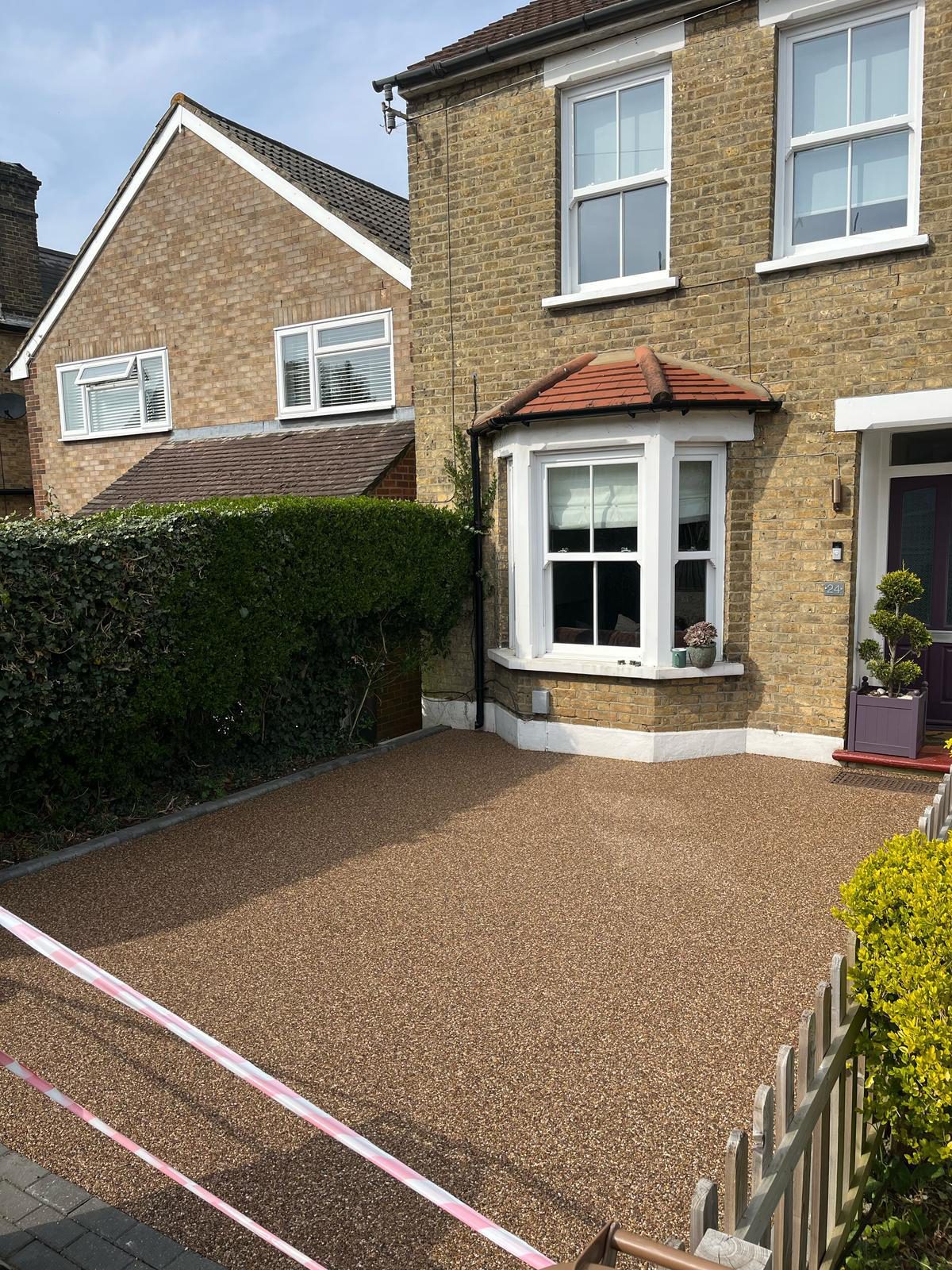
Resin-bound surfacing is temperature-sensitive during the mixing and application stages. Cold temperatures slow the curing process. Very high temperatures can accelerate it too rapidly, reducing the working window. Resin should never be applied when frost is forecast or when ground temperatures are below a safe threshold.
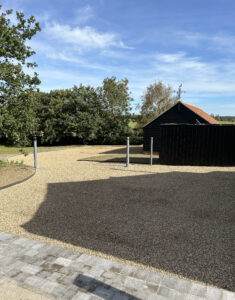
Tar and chip, also known as surface dressing, relies on a bituminous binder that must penetrate and adhere properly. This works best during the warmer months when the binder can flow freely and the chippings bed in well.
Rain and Moisture: A Surfacing Risk
Wet conditions present some of the most common challenges in driveway installation.
Tarmac and bituminous materials are hydrophobic — they repel water. However, a wet substrate can prevent proper adhesion between the new surface and the existing base. This is why we always assess ground conditions before work begins. Rain during or immediately after laying can also affect the finish.
Resin is particularly vulnerable to moisture. Most resin systems are moisture-sensitive during application. If water is present on the surface or in the aggregates, it can cause hazing, bubbling, or adhesion failure. We monitor conditions carefully and will not lay resin in wet weather or when rain is forecast during the curing window.
Block paving is generally more tolerant of damp conditions, but any waterlogged ground must be addressed before work begins. A saturated sub-base will not compact correctly, leading to movement and settlement further down the line.
Mid-Article: Thinking About a New Driveway?
Timing your installation correctly can protect your investment and ensure a better result. Our team is happy to advise on the best time of year for your chosen surface and location. Call us on 01787 275929 or get in touch via our contact page for a free, no-obligation quote.
Cold Weather and Frost
Frost is one of the few conditions that brings most surfacing work to a halt.
Laying tarmac on frozen ground is not recommended. The frozen sub-base does not allow for correct compaction, and as the ground thaws, the surface above it can shift or crack. We avoid laying tarmac when overnight temperatures are forecast below freezing.
Resin must never be applied when frost is present, either on the surface or within the base layers. Even residual ground frost can cause the resin to fail during the curing process.
While some groundwork and preparation tasks can continue in cold weather, we always prioritise quality over speed. Rushing an installation in poor conditions is a false economy.
Wind and Direct Sunlight
High winds and strong direct sunlight can both cause problems during installation.
For resin surfaces, rapid evaporation caused by wind or intense sun can affect the curing process, particularly at the edges. Our teams manage this by working in sections and timing applications carefully during warmer months.
Tar and chip surfaces require calm, dry conditions for application. Wind can cause chippings to move before they have bedded in, affecting the final finish.
The Best Time of Year to Install a Driveway
In general, late spring through to early autumn offers the most reliable conditions for driveway installation in the UK. Ground temperatures are higher, rain is less frequent, and there is more daylight to complete work efficiently.
That said, tarmac and block paving can often be installed through milder periods of winter, provided temperatures are above a safe threshold and the ground is dry. Our teams are experienced in assessing site conditions and making informed decisions about when it is appropriate to proceed.
How Heritage Roadways Manages Conditions
With over 40 years in the industry, we have learned to plan around the British weather rather than hope for the best.
Before every project, we assess ground conditions, review forecasts, and discuss timing with our clients. If conditions are unsuitable when a project is due to begin, we will say so — and we will explain why. We believe honest communication leads to better outcomes.
We would rather reschedule a job than compromise on quality. That approach has helped us build a reputation for durable, long-lasting results across both residential and commercial projects.
Ready to Plan Your Driveway Installation?
Our team is happy to advise on the right time of year for your project and the surface that best suits your needs and location. We cover Suffolk, Essex, Cambridgeshire, Norfolk, the Cotswolds, Berkshire, and Hertfordshire.
Call us on 01787 275929 or visit our contact page to request a free, no-obligation quote.