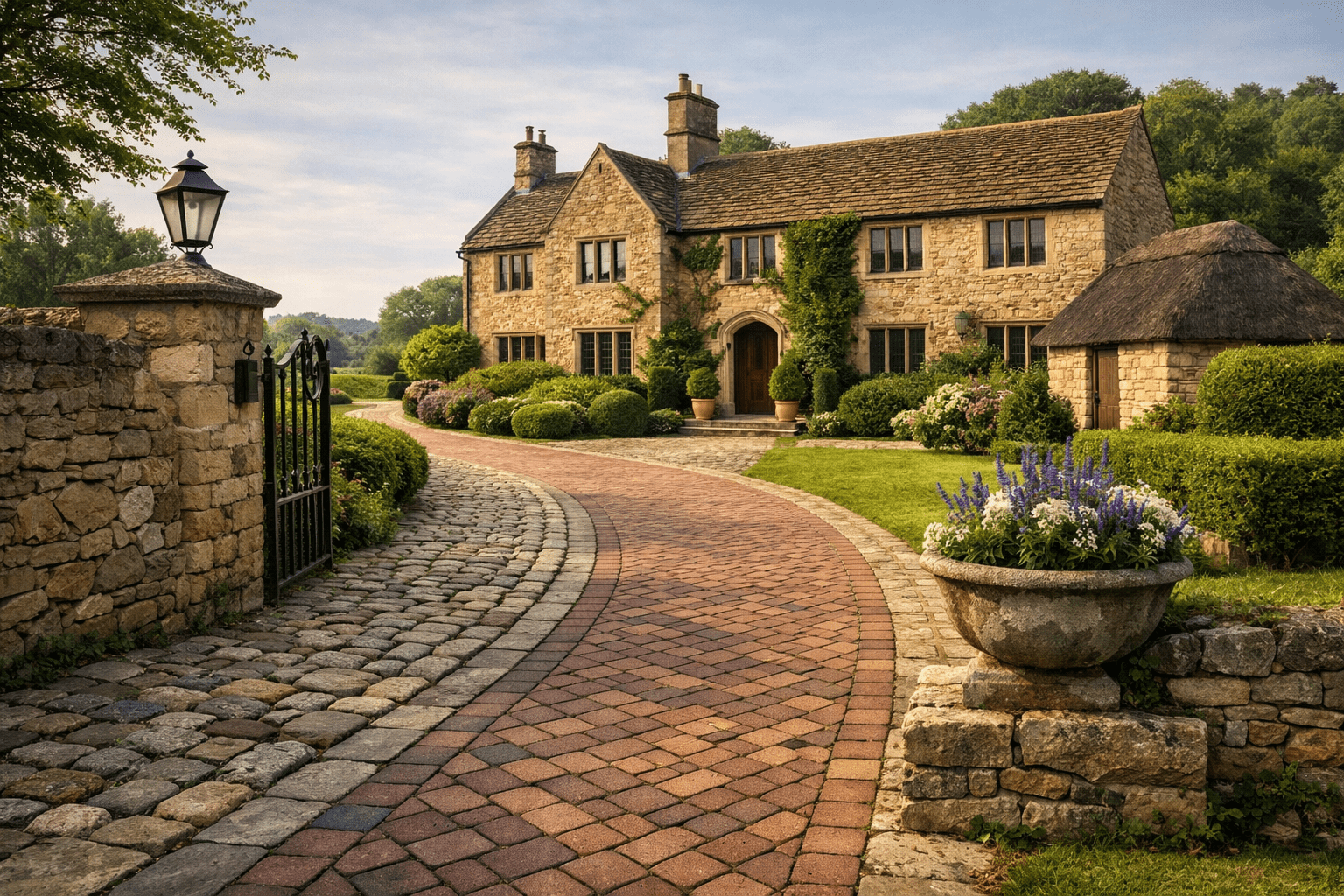
When you own a period property — whether a listed farmhouse in the Cotswolds, a Victorian villa in Suffolk, or a grand estate in Berkshire — the driveway is far more than a practical necessity. It sets the tone for everything that follows. Get the surface right and it becomes part of the property's character. Get it wrong and it can look jarring, dated, or worse, out of keeping with the building's history.
With so many surfacing options available, choosing the right finish is one of the most important — and most frequently misunderstood — decisions a heritage property owner can make. This guide is designed to help you think it through clearly, so you can approach the decision with confidence.
Why Heritage Properties Demand a Different Approach
Most driveway guides are written with modern housing developments in mind. For heritage properties, the calculus changes. Planning constraints, Listed Building considerations, Conservation Area guidance, and the visual expectations of a period setting all have a bearing on what is appropriate — and what is possible.
The goal isn't just a durable surface. It's a surface that earns its place. One that looks as though it belongs, performs well in all weathers, and complements the architecture rather than competing with it.
That combination narrows the field considerably — but it also opens the door to some genuinely beautiful results.
The Options Worth Considering
Tar and Chip (Surface Dressing)
Tar and chip — sometimes called chip and tar or surface dressing — is arguably the most sympathetic finish for rural and period settings. A layer of bitumen is applied to the prepared surface, and natural stone chippings are embedded into it, creating a textured finish that sits naturally within a countryside or estate environment.
Available in a range of stone colours and sizes, it can be matched closely to the surrounding landscape. Warm honey-coloured flints for a Suffolk farmhouse, grey granite chippings for a stone-built manor — the material lends itself to a bespoke approach.
It is also a genuinely practical choice. Excellent grip, good drainage characteristics, and a lifespan of 10 to 15 years or more with periodic maintenance make it a sound long-term investment. For working estates, farm approaches, and longer drives where budget and practicality both matter, tar and chip is often the most appropriate solution.
Resin-Bound Surfacing
Resin-bound surfacing has grown considerably in popularity over the past decade, and for good reason. A mixture of natural aggregate and clear resin is applied to a prepared base, producing a smooth, permeable surface with a refined, contemporary finish.
For heritage properties, the appeal lies in the aggregate selection. Natural gravels, crushed stone, and quartz blends in earthy tones — warm golds, soft greys, creamy whites — can produce a finish that reads as traditional even while the product itself is modern. It is SUDS-compliant, resists weeds effectively, and requires minimal upkeep.
Resin-bound works particularly well on formal approaches, gated entrances, and courtyard areas where a clean, well-maintained appearance is the priority. It pairs well with dressed stone edging and natural stone paving, making it a versatile choice for heritage settings that want a polished result without sacrificing character.
Natural Stone Paving
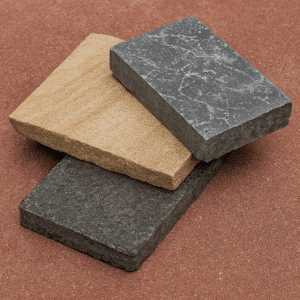
Where the brief calls for maximum authenticity, natural stone remains the definitive answer. Indian Sandstone, Limestone, Granite, Slate — each material brings its own texture, tone, and sense of place.
For properties where the driveway transitions into a forecourt or courtyard, natural stone creates a coherent visual language that complements stone walls, brick detailing, and period architecture. It ages gracefully, developing a patina that only improves with time.
The investment is higher than most other surfaces, but the lifespan — often 20 years or more with appropriate maintenance — and the aesthetic quality it delivers make it the right choice for the right setting. At Heritage Roadways, we have worked on some of the country's most prestigious historic properties, including Highclere Castle and Blenheim Palace, where natural stone and premium surfacing materials were the only appropriate solutions.
Tarmac
Standard black tarmac is rarely the instinctive choice for a heritage property, but it should not be dismissed entirely. For long, working driveways on agricultural or estate land where robustness and cost-efficiency are paramount, tarmac delivers excellent durability and low maintenance. It also provides a stable base for other decorative finishes or border treatments.
Some heritage property owners use tarmac for rear access roads or outbuildings while choosing a more characterful surface for the principal approach. That combination — practical where practicality is needed, considered where visibility matters — is often the most sensible approach.
The Questions to Ask Before You Decide
What does the planning framework allow?
If your property is listed or within a Conservation Area, you may need consent before making changes to the driveway. It is always worth checking with your local planning authority before committing to a material. A specialist contractor with experience of heritage projects will be able to advise on what is typically acceptable.
What is the character of the setting?
A formal gravel approach through parkland calls for something quite different from a short urban forecourt in front of a terraced Victorian townhouse. Consider the surrounding landscape, the scale of the approach, and the architectural style of the building itself. The surface should feel native to its environment.
How much use will the driveway receive?
A private entrance used by two or three vehicles is a different proposition from a drive serving multiple properties, farm machinery, or commercial vehicles. Load-bearing capacity, surface resilience, and maintenance requirements all vary significantly depending on usage, and the right surface for a lightly trafficked country lane is not necessarily right for a working farm approach.
What is the realistic long-term commitment?
Every surface requires some level of maintenance. Resin-bound and natural stone are relatively low-maintenance once laid correctly. Surface dressing benefits from periodic reapplication. Tarmac may need patching over time. Understanding the ongoing commitment upfront helps avoid unpleasant surprises later.
What is the budget, and what is the priority?
Budget matters, but so does the framing. A driveway at a heritage property is a long-term investment that contributes to the property's value, its character, and the impression it makes on everyone who arrives. The right question is rarely "what is the cheapest option?" but rather "what delivers the best value over time, in this setting, for this property?"
A Note on Getting the Detail Right
Whatever surface you choose, the quality of the preparation beneath it is what determines how well it performs. Proper excavation, a well-constructed sub-base, effective drainage — these are not visible once the job is done, but they are what separates a surface that lasts decades from one that begins to fail within a few years.
Heritage properties often present additional groundwork challenges: tree roots, historic drainage systems, uneven ground levels, and access constraints are all common. Working with a contractor who understands these complexities — and who has the experience to deal with them calmly and professionally — is at least as important as choosing the right surface material.
Thinking About Your Driveway?
Heritage Roadways has spent over 40 years working on surfacing projects across Suffolk, Essex, Cambridgeshire, Norfolk, Hertfordshire, Berkshire, and the Cotswolds — including some of the most prestigious historic estates in the country. We understand the particular demands of heritage settings, and we approach every project with the care and experience those settings deserve.
If you are considering a new driveway or resurfacing project at a period or heritage property, we would be glad to offer honest, practical advice based on your specific situation. Get in touch using the link in our profile to arrange a no-obligation conversation.